The benchtop is the one surface in a kitchen you touch every single day, and it's usually the second biggest line on the quote after the cabinets. Get it right and you stop thinking about it. Get it wrong and you're reminded every time you put down a hot pan or wipe up a red wine ring. The choice also got more interesting in Australia lately, because the material half the country was installing is now banned.
The engineered stone ban changed the whole conversation
Since 1 July 2024 it's been illegal to manufacture, supply or install engineered stone benchtops in Australia, with an import ban following from 1 January 2025. This is the reconstituted quartz that dominated kitchens for a decade, the Caesarstone-style slabs. The ban came in because cutting the stuff releases fine crystalline silica dust that was giving stonemasons silicosis at frightening rates. If you already have an engineered stone benchtop you can keep it, but you can't buy a new one. That has pushed everyone toward the alternatives below, so it's worth understanding what actually replaces it.
Laminate, and why it's not the poor cousin it used to be
Laminate is a printed surface bonded to particleboard, and modern versions from Laminex and Formica look far better than the speckled sheets you remember from the nineties. Stone-look and timber-look finishes with matte textures genuinely pass at a glance. It's the cheapest option by a distance, roughly $150 to $400 per lineal metre supplied and installed, it's warm underhand, and it fits a tight reno budget. The catch is heat and water: a hot pan will scorch it, and a swollen join near the sink is the classic failure. Treated kindly it lasts ten to fifteen years. For a rental or a first home, I'd fit it without apology.
Granite is back now that quartz is gone
Natural granite fell out of fashion during the engineered stone years, and it's having a quiet return because it's still legal and it's genuinely tough. Every slab is unique, it takes a hot pot without flinching, and it wears for decades. Two honest downsides: the busy speckled patterns read a bit mid-2000s to some eyes, and it's porous, so it needs sealing on install and roughly once a year after. Budget around $600 to $1200 per square metre installed depending on the stone. It gets fabricated with proper dust control now, which is the whole point of the shift.
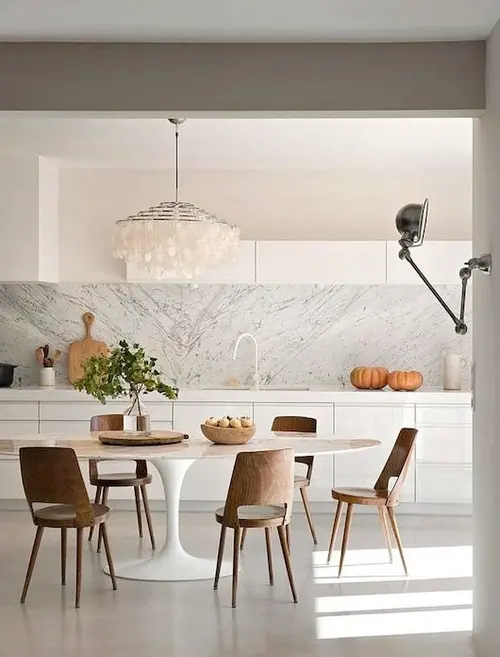
I'll be blunt: I love how marble looks and I talk most people out of it for a main kitchen. It's soft and it etches, which means anything acidic, lemon juice, vinegar, a splash of wine, eats a dull mark into the polish that no wiping will fix. It stains if you leave oil sitting on it. Carrara or Calacatta on an island you baby, fine. As the main working bench in a family kitchen, you'll be patching your heart out. If you want the look without the tears, the porcelain slabs below fake it well. Marble runs $700 to $1500 per square metre and up.
Porcelain and sintered stone, the main replacement now
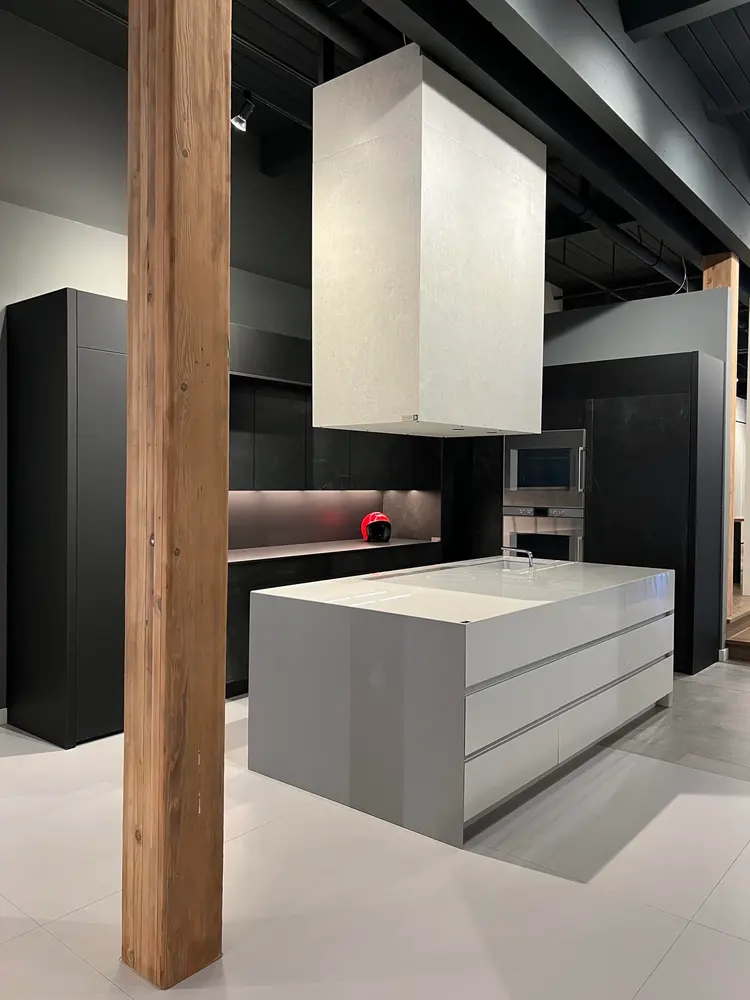
This is where most of the market has moved since the ban. Porcelain and sintered stone (brands like Dekton, Neolith and Laminam) are fired at very high heat into a dense slab that isn't bound with resin, so they sit outside the engineered stone rules. The performance is excellent: it takes heat straight off the cooktop, it doesn't scratch easily, it resists stains, and large-format slabs mean fewer joins. It'll do a convincing marble look or a raw concrete look. The downsides are price and fabrication, because it's a hard, brittle material that needs an experienced installer and a chipped edge is tricky to repair. Expect $900 to $2000 per square metre installed. If I were speccing a kitchen today, this is where I'd start.
A solid timber benchtop, spotted gum, blackbutt, messmate, oiled American oak, brings a warmth into a kitchen that stone never manages. It's kind to dropped glasses, you can sand out scratches and small burns, and it ages well if you look after it. That's the deal, though: it wants re-oiling a couple of times a year, it moves a little with humidity, and the zone around the sink needs sealing or it'll go black. I like it as a contrast, a timber island against stone perimeter benches, more than wall to wall. Around $400 to $900 per square metre depending on species and finish.
Stainless steel if you cook like a chef
There's a reason commercial kitchens run stainless everywhere. It's hygienic, heatproof, takes any pot straight off the flame, and it never stains. In a home it divides people: it scratches into a patina of fine swirls over time, which some read as honest and industrial and others can't stand, and it shows fingerprints and water spots. Fabricated to order it isn't cheap, $700 to $1400 per square metre. If you genuinely cook hard, nothing else keeps up with you.
Solid surface for joins you can't see
Solid surface (Corian is the famous name) is an acrylic-and-mineral blend that's cast, not quarried. Its trick is that sheets bond together with the joins sanded invisible, and you can run an integrated sink in the same material with no rim to trap grime. It's warm, repairable with a light sand, and comes in any colour. It scratches and it won't take a scorching pan, so it's not for heavy cooks, but for a clean, low-fuss look it's underrated. Roughly $700 to $1200 per square metre.
Concrete for a one-off you can't buy off a shelf
Poured concrete gives you a benchtop in almost any shape with a raw, heavy look, and every one comes out slightly different. It can be cast in place or made off-site and craned in. Be realistic about the downsides: it's porous and needs sealing, it can hairline-crack as it cures (plenty of people accept that as character), and it's seriously heavy, so your cabinets have to be built to carry it. It's a specialist job, usually $900 to $1600 per square metre. Right for a particular industrial look, wrong if you want something you never think about.
Match the bench to how you actually cook
Put the mood boards down for a second and think about your habits. If you cook hot and heavy and land pans straight on the bench, you want porcelain, stainless or granite. If budget rules, laminate does more than people admit. If you want warmth and don't mind the upkeep, timber. If the kitchen is more for show than searing, marble or solid surface will be fine and look the part. The most expensive benchtop is the one you pick for the photos and then resent for a decade.
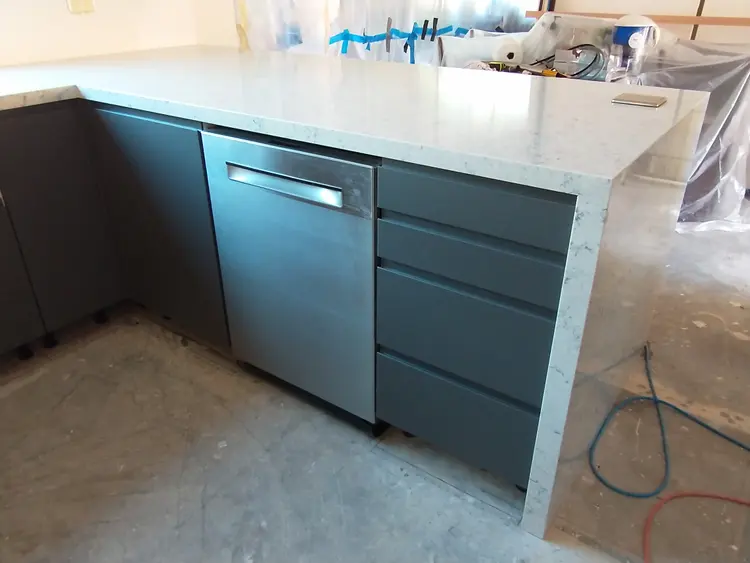
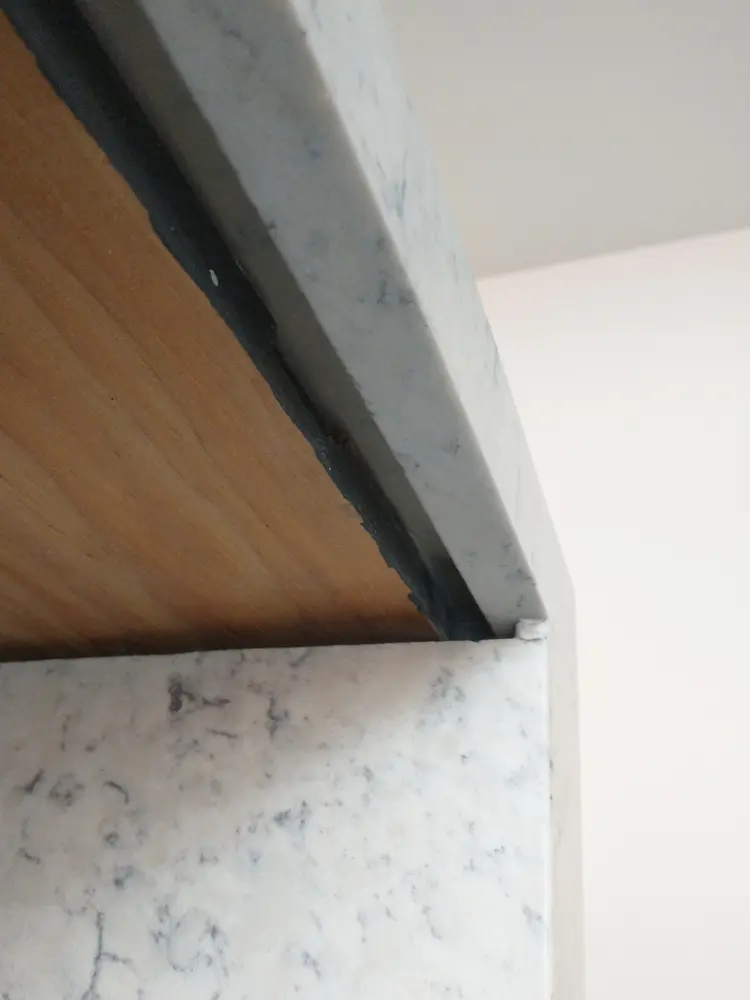
Two kitchens with the same stone can look completely different depending on the edge. A slim 20mm profile reads modern and costs less; a chunky 40mm, or a mitred 60mm, looks more solid and hides more mass underneath. A waterfall end, where the stone runs down the side of an island to the floor, looks great but adds a whole slab and a lot of labour to the bill. Decide this before you get quotes, because it swings the price more than most people expect.
Getting quotes without getting stung
Prices swing wildly between fabricators, so get three quotes and make sure they're pricing the same thing: same material and slab, same edge profile, same number of cutouts for sinks and cooktops, and delivery and install included. Ask to see the actual slab before it's cut, since natural stone especially varies piece to piece. And ask how they control silica dust, because even on the legal materials it's your installer's health at stake and it's a fair sign of a decent operator. Spend where your hands and your hot pans land, and save on the surfaces you only ever look at.
What a kitchen actually costs in Australia this year — budget, mid-range and premium, adjusted for your city — plus the questions to ask a kitchen builder before you sign.