There's a particular misery in stepping out of a hot shower on a July morning in Melbourne and reaching for a towel that's gone cold and slightly damp overnight. A heated towel rail fixes that for a few cents a day, and it doubles as a low background heater that keeps the bathroom from feeling like a cave. I've fitted a handful of these over the years, in my own place and for clients, and the gap between a good one and a cheap one is wider than the price tag suggests.
Here's how the main types stack up, what you'll pay in Australia right now, and where I'd actually spend the money. One thing to sort before the fun part: any hardwired rail has to go in by a licensed electrician, and near water it needs to be rated IP44 or better. Plug-in and freestanding models you can fit yourself. Hydronic rails need a plumber.
Electric ladder rails, the sensible default
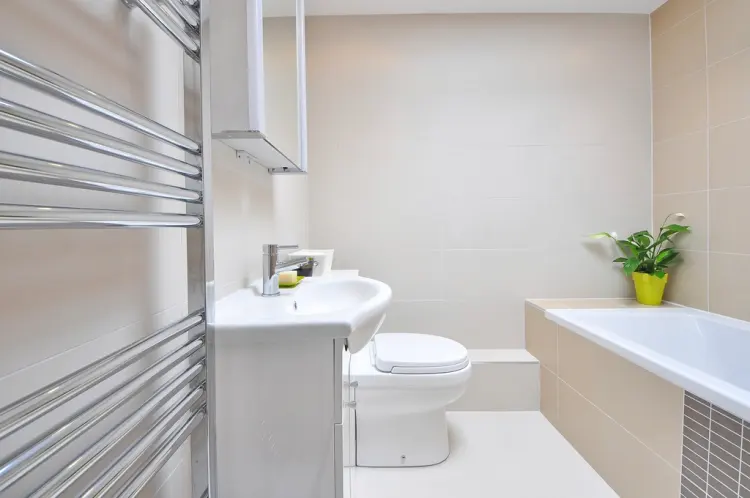
If you're not sure what you want, get one of these. A dry-element electric ladder rail runs a heating wire through the bars, warms up in ten to thirty minutes depending on size, and draws 60 to 120 watts, about the same as a couple of old-style globes. A standard eight to ten bar rail sits 1100 to 1200mm tall and 500 to 600mm wide, which holds two bath towels comfortably. Reckon on $150 to $350 for a decent one, and remember the hardwired versions need an electrician. Browse electric ladder towel rails on Amazon AU.
Some electric rails have a sealed fluid inside that the element heats, rather than warming the bars directly. They take longer to get going, closer to an hour, but they hold their warmth well after switch-off, so a rail on a timer stays warm through the morning rush. They cost a bit more, roughly $250 to $500. I like them in a main bathroom that three people cycle through before work. See liquid-filled towel rails on Amazon AU.
Hydronic rails if the pipes are already there
If your house runs hydronic heating, you can plumb a towel rail into the same loop and it costs almost nothing extra to run, because it's riding on heat you're already making. Retrofitting hydronic just for a towel rail rarely stacks up though. The plumbing and the pump make it an expensive way to warm two towels, so this one's really for people building new or already sitting on a hydronic system. A plumber fits it, not an electrician.
Single bars and compact rails for an ensuite
A full ladder rail swallows a small ensuite or a powder room. A single heated bar at 600 to 800mm wide, or a short four-bar rail, does the job in the space you've got and pulls even less power, often under 60 watts. It won't dry three beach towels, but for a hand towel and a bit of ambient warmth it's plenty. $80 to $200. Compact heated towel bars on Amazon AU.
Plug-in and freestanding rails for renters
If you can't drill into tiled walls or you're renting, a freestanding or plug-in rail sidesteps the whole electrician question. They stand on the floor or hook over a door, plug into a normal socket, and move house with you. The trade-off is a visible cord and a little less stability, so keep them clear of the wet zone around the shower. Around $60 to $150. Portable heated towel rails on Amazon AU.
A rail left on all day costs more than it should and shortens the element's life. A timer or smart switch, built into some rails, wired inline by your electrician on others, means the rail comes on an hour before your alarm and shuts off mid-morning. That's the difference between a few cents a day and a rail humming away to an empty house. A 150W rail run four to six hours a day works out around 30 to 45 cents. Get the timer. Timer-equipped towel rails on Amazon AU.
Brushed brass and warm metallics
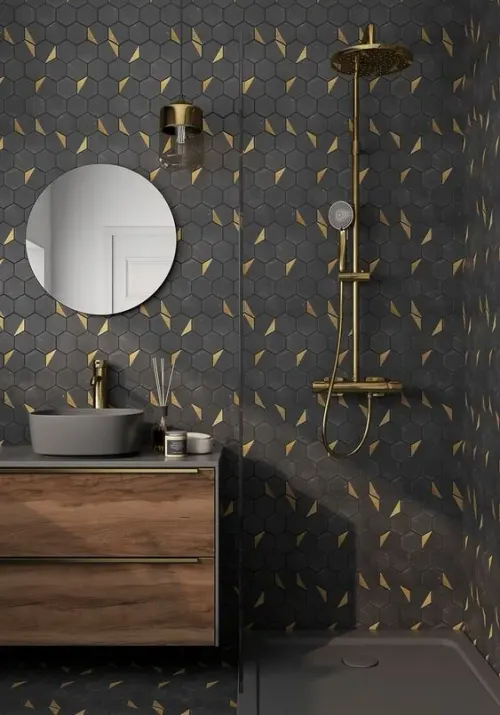
Brushed brass and champagne finishes have taken over bathroom tapware in the last few years, and the rails have followed. They look good against dark tiles or a moody green wall. Two things to know: the finish carries a premium, usually $100 to $200 over the chrome version of the same rail, and cheaper brass-look coatings can wear at the points where towels rub. Buy from a brand that warrants the finish. Brushed brass towel rails on Amazon AU.
A word on matte black
Matte black looks sharp in the showroom and photographs beautifully, which is why it's everywhere. In a real bathroom it shows dust, water spots and toothpaste flecks more than any other finish, and once it's warm you notice every mark. I still fit it when a client is set on the look, but I warn them they'll be wiping it down more often. For a busy family bathroom, chrome hides life better. Matte black towel rails on Amazon AU.
Chrome is boring, and I keep buying it
Polished chrome is the finish nobody pins to a mood board, and it's the one I reach for most. It shrugs off water marks, wipes clean in a second, suits almost any tile, and it's usually the cheapest version of any given rail. If you want the safe pick that still looks right in ten years, this is it. Chrome heated towel rails on Amazon AU.
A standard 600mm rail holds two towels if you fold them narrow. A family of four or five needs more bar. Rails from 750 up to 1200mm wide, or a twin-ladder design, give everyone a spot and actually dry the towels between uses instead of leaving them damp. You pay for the extra metal and the higher wattage, generally $300 to $600. Wide and family-size towel rails on Amazon AU.
The budget end, and what you give up
There's a tier of rails at $60 to $130, Kambrook, Devanti and a lot of unbranded imports, and they do heat towels. What you give up is the timer, the warranty on the finish, and often the wet-area rating, so read the specs before one goes anywhere near a shower. For a guest bathroom used twice a month, fine. For daily use I'd spend up a tier. Budget heated towel rails on Amazon AU.
What to check before you click buy
Four things. Wattage tells you the running cost and the heat, and higher isn't always better in a small room. The IP rating has to be IP44 or above for anywhere near water. Confirm whether it's hardwired, which means booking an electrician, or plug-in. And measure the wall, leaving room for towels to hang without touching the vanity or fouling the door swing. Sort those and you're unlikely to regret the buy.
Free: the bathroom renovation cost & planning pack
2026 Australian bathroom costs by finish level and city, what keeping the existing bath or vanity saves you, and the waterproofing paperwork to insist on.